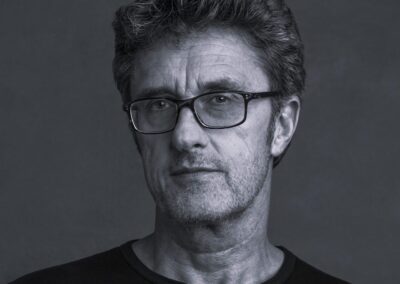
Pawel Pawlikowski is one of cinema’s most consistent and interesting contemporary film directors and his new film, Fatherland, starring Sondra Huller, is playing at the UPP in November.
Pawlikowski, now in his late 60s, was born in Warsaw in Poland in 1957 and his most recent films, the Oscar winning Ida (2013) and Oscar-nominated Cold War (2018) have been set in his home country; loosely based upon elements of his family’s experiences, whilst also charting Poland’s complex post-war history. Like Fatherland, both films are ravishingly shot in black and white by fellow Pole, cinematographer Lukasz Zal (who also worked on Glazer’s Zone of Interest and Zhao’s vastly over-praised Hamnet); are impeccably structured (with very brief running times) and have featured the successful Polish actress Joanna Kulig (Pawlikowski’s so called “muse”) who also appeared in what might be considered his one and only misfire – the Ethan Hawk starring erotic thriller The Woman in the Fifth (2011) which was based on a novel by Douglas Kennedy.
 Pawlikowski, who was educated at Oxford, where he studied Literature and Philosophy, moved to London as a young teen and currently resides in the UK. He began his career working in documentaries. He transitioned to fiction film making in 2000, when he directed the Margate based drama Last Resort, co-written by Rowan Joffe (who went onto to write George Clooney’s under rated thriller The American, directed by photographer Anton Corbijn in 2010; Edward Berger’s recent Netflix gambling drama Ballad of a Small Player [2025] which starred Colin Farrell, as well as directing the 2010 Brighton Rock “re-boot,” which featured Sam Riley and Andrea Riseborough).
Last Resort was an auspicious debut and told the story of a young Russian asylum seeker and single parent (played by Russian actress Dina Korzun), sent to a “designated holding area” in the dilapidated seaside town of Stonehaven (a surrogate Margate) who is drawn into the murky world of on-line pornography but is eventually “saved” by Paddy Considine’s ex –con boxer. It’s an interesting film to compare to Sam Mendes’ nostalgic ode to cinema Empire of Light (2022) which was also shot in the same town, over twenty years later and which manages to show the changes which have taken place since it has become “regenerated” and given “hipster” status by both the opening of the Turner Contemporary Gallery in 2011, the establishing of the Dreamland funfair as a great music venue and, somewhat surprisingly, Madonna, who described it as her “idea of heaven,” in a much discussed Instagram post, earlier this year.
His follow up, an adaptation of Helen Cross’s coming of age drama My Summer of Love (2004) again starred Considine and also marked the film debut of none other than Emily Blunt. The film was shot in the West Yorkshire town of Todmorden over five weeks in what turned out to be the region’s hottest summer for 50 years, although trying to cast the film took almost eight months.
Largely improvised and shot in a beautifully stylised way by Ryszard Lenczewski (who had shot Last Resort and would be Oscar nominated, along with Lukasz Zal for Ida and who died earlier this year) My Summer of Love is a beguiling tale of friendship and class; love and religion. Pawlikowski, who claims that he is “arrested in” his “adolescent emotions,” wanted to make a film which was a timeless investigation into childhood and has suggested he identified with the film’s central character Mona (played by Natalie Press) to an “unhealthy degree.” Perhaps the fact that the film is very much about outsiders is what drew him to this very feminine story? My Summer of Love is a great British film, that’s for sure and well worth re-visiting.
After this, Pawlikowski turns his attention towards Europe and Woman in the Fifth (2011) is another collaboration with Lenczewski, who also shot Richard Lonergan’s under-rated Margaret in the same year. This is an enigmatic puzzle of a film – well acted (as well as the ever-reliable Ethan Hawk, it also features Kristin Scott Thomas, who is also always highly watchable) and set in Paris. For the first time, however, Pawlikowski makes a mis-fire. It’s not an unmitigated disaster by any means but it’s not a film I have “gone back to,” and it feels like an outlier in his career, almost as if his heart wasn’t quite in it.
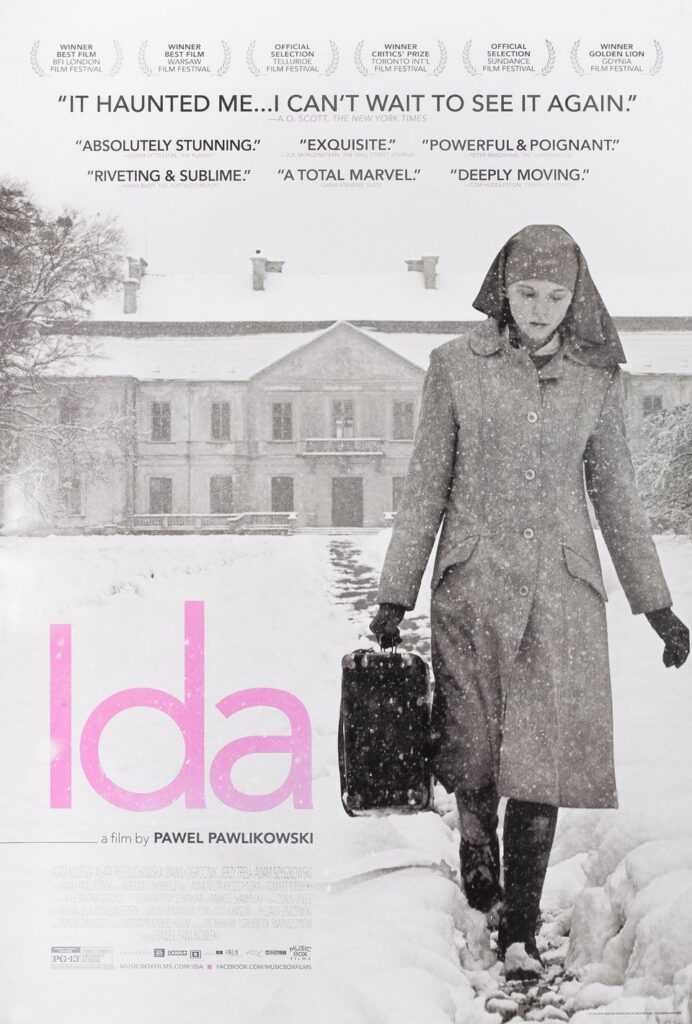
However, the decision to directly confront attitudes in his home country as it struggled with its identity following the Second World War, most definitely re-invigorated the film-maker and Ida, in 2013, is a bona fide masterpiece, and one of the best films of this century.
The plot is deceptively simple – a novice nun, about to be initiated fully into the church, discovers she has a Jewish heritage and that her relations suffered terribly during the Nazi occupation. At the same time, rather like the girls in My Summer of Love, the main protagonist is also grappling with her own psychology as she becomes a young woman, about to forgo earthly pleasures for a lifetime of dedication to her faith. These are weighty topics and the film beautifully steers its way through both of them becoming both a fascinating investigation into a “hidden history” as well as a delicately handled look at the nature of love. Its sensual 50s setting, with its jazz music and cigarette smoke further fuels the film’s allure. The movie became an A Level Film set text and always played well with pupils, in spite of its apparently alienating subject matter and the decision to shoot the film in glorious black and white.
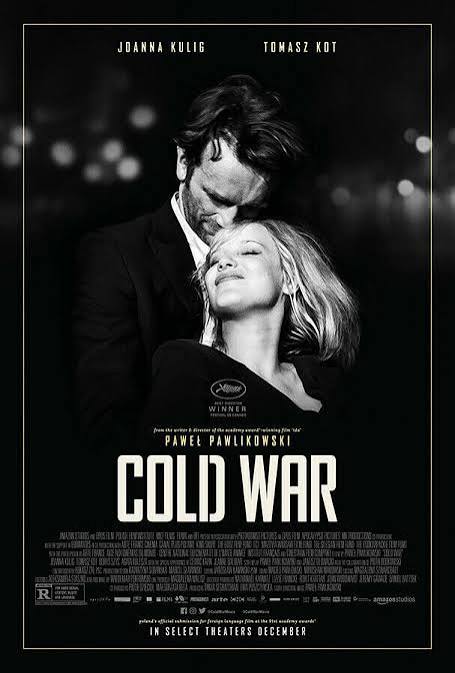 As mentioned earlier, when Pawlikowski makes his next film Cold War, five years later, loosely inspired by the lives of his parents and also set in post-war Poland in the 50s, he again uses jazz music and the swirls of cigarette smoke to brilliant effect. The story is of a doomed on-off relationship between two very different musicians and charts their lives over several tumultuous decades. It’s almost like Dr Zhivago but a much tighter tale – one full of dazzling imagery, concise story-telling and impeccable performances. It’s also one hell of a “cool” film – although nothing like something made by Tarantino or Wes Anderson. If your idea of style is sitting in a jazz club on the Rive Gauche with a Gauloise, a Pastis and a slightly battered paperback copy of De Beauvoir, then this is the film for you. Like Ida, it’s also one of my favourite films this century and it certainly brings out the bruised Romantic in me, every time I watch it.
Which brings us to Fatherland, which is showing at the UPP this month. The film won Pawlikowski Best Director when it was screened at Cannes earlier this year and has been getting rave reviews, with critics citing both its elegance and impeccable cinematography. The story charts German author Thomas Mann’s road trip with his daughter across Germany in the late 1940s as he comes to terms with both the horrors done to and by his home country and how this has affected his own relations with his family. Again, these are weighty themes – but ones Pawlikowski has investigated previously. The road move aspect of the film reminds us of the early work of Wim Wenders (who also shot in ravishing black and white – interestingly its male star Hanns Zischer also appeared in Kings of the Road, back in 1976) and thus far (Digger apart) Sondra Huller has yet to give a bad performance.
To say this film is “eagerly awaited,” is something of an understatement.
But to really appreciate it, I would strongly advise viewers to look back at the five films Pawlikowski made previously, all of which pave the way towards Fatherland: a fine body of work by anyone’s standards and evidence, if required, that Pawel Pawlikowski is not only one of our finest directors but he is also, arguably, “up there” with the likes of Hitchcock, Kubrick and Welles as one of the greatest of auteurs.
And that’s no mean achievement.
Fatherland is showing from Friday 6 November. Click here to book tickets.
Dr Andrew C Webber is a Film teacher and examiner with over 40 years’ experience. He contributed to both the sadly defunct Cinema of the 70s and 80s magazines (still available on Amazon); cassette gazette fanzine (available from cassette pirate on e-bay) and the Low Noise music podcast, available on Spotify and Apple podcasts (now concluding its fifth season). He is currently planning an International Hitchcock and De Palma academic conference to take place at Stowe school in Buckingham next August.