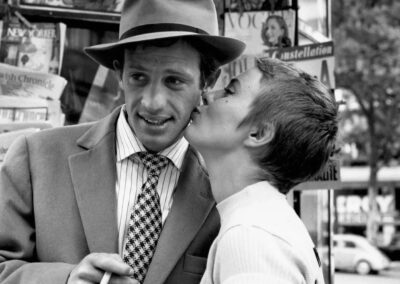
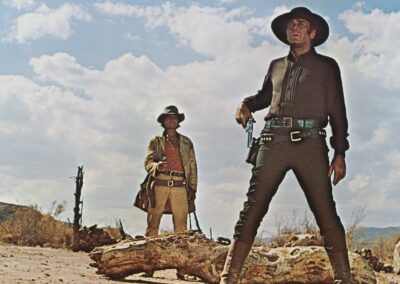
As you get older, you learn to love westerns all the more.
I know there’s still them that say they can’t stand the genre. But for this grizzled, mean and melancholy son of a gun, who, to this day always sits facing the door in a bar, there’s nothing like ‘em.
Any list of “greatest films of all time” just has to include more than one western – High Noon, Shane, My Darling Clementine, The Good, the Bad and the Ugly, The Searchers, Johnny Guitar (which screened recently at the UPP as part of the BFI Melodramarama season), The Wild Bunch, Butch Cassidy and the Sundance Kid (to be screened later this month at the UPP) and, whilst the genre may have appeared to lose momentum in the 1970s, we should not forget that this decade also gave us Robert Altman’s deeply moving McCabe and Mrs Miller, Peckinpah’s elegiac Pat Garrett and Billy the Kid, Don Siegel’s John Wayne swansong The Shootist and the 80s began with Michael Cimino’s epic disaster Heaven’s Gate, a seriously under-rated film, massively expensive and unloved. Arguably, it is this film which puts the final nail in the genre’s coffin, Eastwood’s Pale Rider, five years later being the first western to be produced by a major film studio, after the critical mauling and subsequent butchery of Cimino’s film (his masterpiece, actually, but that’s another story). If you compare that to the 40 made in 1964, for example, you can see how significantly the genre fell into decline in the 80s.
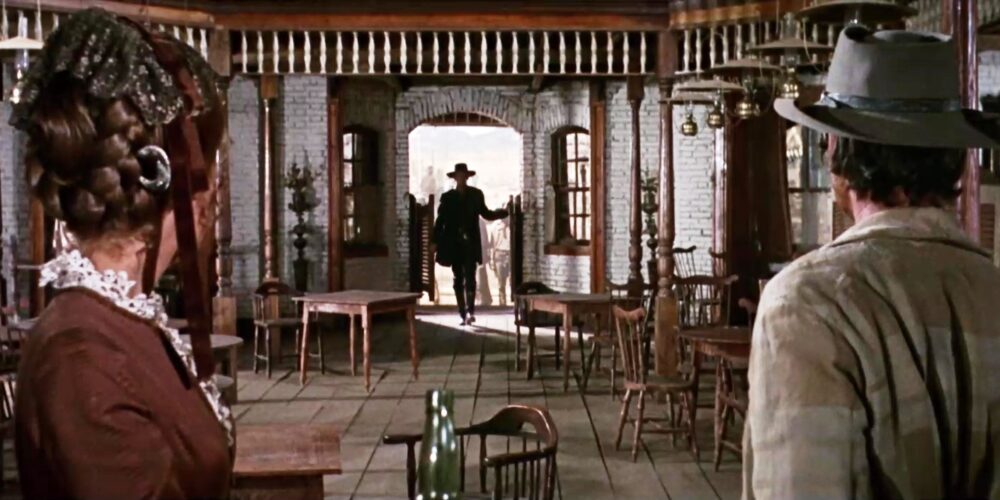
During the mid-1960s, however, Italian film director Sergio Leone (along with actor Clint Eastwood) had resurrected what appeared to be the faltering western genre by creating a new take on its tropes and introducing the world to the “spaghetti” western; a man with no name and a poncho and cheroot; The Good, the Bad and the Ugly and, in 1968, what appeared to be his masterpiece Once Upon A Time in the West – an absolutely brilliant film in which he doesn’t put a foot wrong. What’s not to love about it? Henry Fonda and those evil blue eyes; Claudia Cardinale’s arrival by train; Harmonica; Ennio Morricone’s operatic score; Robards; the ending, the beginning, everything in-between; the brilliant cinematography by Tonino Delli Colli; the superb railway and the well and the city and the building of America storyline and how it all fits together – there’s no denying that this is one of the greatest westerns ever and, if I am right, then that must make the film one of the best films ever made, even though at the time it was ruthlessly cut, in the USA, by its studio Paramount and a box office flop (a portent of things to come – Leone’s final film, the sublime Robert De Niro gangster drama Once Upon a Time in America was originally 269 minutes, which he then trimmed to 229 minutes, before, in the USA, that film was further butchered down to 139 minutes and re-organised chronologically by the Ladd Company who, after a run of big budget flops including Ridley Scott’s Blade Runner in 1982 and Kaufman’s The Right Stuff in 83 were concerned that its inordinate length would seriously impede its ability to make money at the box office, in spite of the fact that the original version had received a 20 minute ovation when it had premiered at the Cannes film festival that year. Costs of the movie are reckoned to be $30 million – it bombed, somewhat unsurprisingly, taking a mere $5million. The Ladd Company’s biggest hit? Police Academy a few years later. Go figure).
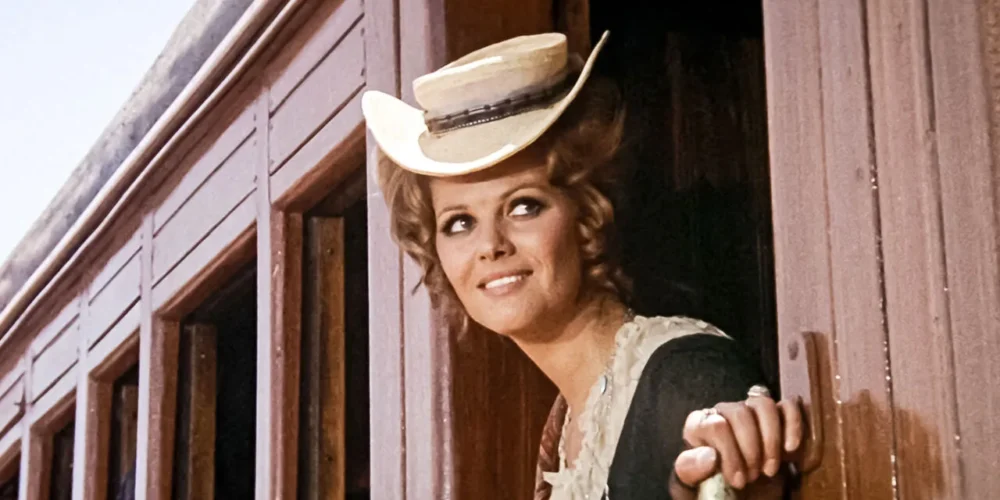
Once Upon a Time in the West is kicking off a short season of films which, Janus-like, starts the New Year by looking backwards. In 2025 we lost a great many talented artists (as we do every year, of course) but movie-lovers were especially affected by the deaths of some true greats: David Lynch, Robert Redford, Diane Keaton, director David Lynch and Claudia Cardinale, who is the main female protagonist in Leone’s film. Whilst she never had the Hollywood profile of Sophia Loren, Cardinale was another Italian actress who made the crossover to Hollywood during the 1960s, at a time when American films were becoming more risqué. Her American films include Blake Edwards’ The Pink Panther, Richard Brooks’ western The Professionals (her favourite American film, apparently) and Joseph Sargent’s long-forgotten war movie The Hell with Heroes. She also featured in Fellini’s much-loved 8 ½ and Visconti’s acclaimed The Leopard and, after Once Upon a Time in the West, returned to Italy where she carried on working and speaking out on feminist issues. Amongst her later films (she made at least another 60) are Visconti’s 1974 Conversation Piece (which reunited her for a third time with Burt Lancaster); George Pan Cosmatos’ star-studded Escape to Athena (1979) and Herzog’s Fitcarraldo in 1982.
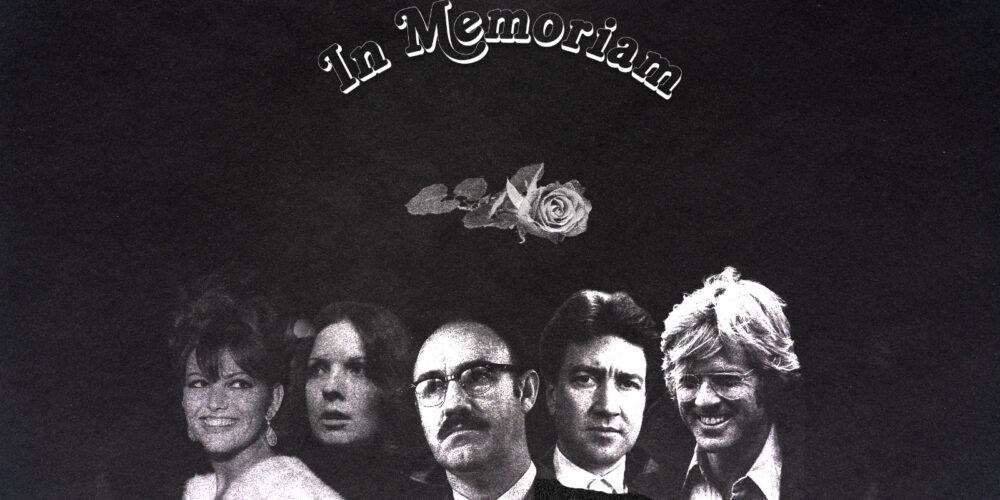
Born in Sicily in 1938 and originally speaking only Sicilian and French, she was first “discovered” in 1957, after winning a competition for “the most beautiful girl in Tunisia,” so, undeniably, it was initially her looks that brought her to the attention of film-makers. However, her younger years were troubled by sexual abuse; mental health issues and “unwanted” pregnancy and her inability to speak Italian resulted in many of her performances being “dubbed.” Bridget Bardot had built a career in the 1950s out of playing roles which became synonymous with the rather derogatory term “sex kitten” and it would be fair to say that Cardinale was often cast in similar roles, both in Europe and America during her early career.
However, by the time she plays the part of Jill McBain in Leone’s western, aged 30, it is obvious that she is playing the role of a woman, not a sultry adolescent. Yes, to some extent it’s a fairly tried and tested role for a female to play in the western genre (the prostitute) but her character has agency and whilst she is, indeed, indebted to two men (Charles Bronson and Jason Robards – who falls in love with her in his own irascible way) to help her keep hold of the farm she has inherited from her husband after he is brutally murdered at the beginning of the tale, she has an unexpected toughness and her beauty is “lived in.” Yes, there’s a disturbing scene when she sleeps with “baddie” Henry Fonda, using her sexuality to protect her from his attempts to buy up the farm but the film’s resolution is an inspirational one. She literally rolls up her sleeves and “gets to work” as if the America to come is no longer going to be built by women having to make a living on their backs, but from kindness, consideration for others and endeavour. It’s a glorious climax which comes unexpectedly but is also nigh on perfect.
The future of America, according to the film, is not going to be won by shoot outs, violence, greed, exploitation and out-dated codes of conduct. In Once Upon a Time in the West, Leone bids the old order farewell (just as Peckinpah had done in The Wild Bunch and George Roy Hill did with Butch Cassidy) and the camera soars majestically.
It’s interesting that in the 1970s, as already pointed out, the western doesn’t vanish and, perhaps surprisingly, the decade was actually rather a good one for the western. Just look at 1972, for example. In that year, cinema goers were able to see a veritable treasure trove of westerns on the big screen: Robert Benton’s excellent coming of age Bad Company; Michael Winner’s Chato’s Land with Charles Bronson (of course) as a the eponymous Native American; The Duke, finally getting bumped off in Mark Rydell’s The Cowboys; Redford as a mountain man in Sydney Pollack’s Jeremiah Johnson; Leone’s unsatisfying follow up to Once Upon a Time, A Fistful of Dynamite (with the magnificent James Coburn and Rod Steiger); Robert Aldrich’s bleak Burt Lancaster Vietnam parable Ulzana’s Raid; John Huston’s John Milius scripted The Life and Times of Judge Roy Bean (with Paul Newman); Eastwood as Joe Kidd; Dick Richards’ The Culpepper Cattle Company; Phil Kaufman’s The Great Northfield Minnesota Raid (a prototype Long Riders) and Stan Dragoti’s hard to see Dirty Little Billy, with none other than Bonnie and Clyde’s Michael J Pollard as Billy the Kid (who apparently, according to the poster, “was a punk”).
Not only did the western thrive in 1972, but this was also a year when the neo-western – a sort of modern take on the genre, often with a rodeo rider as a main character – a “genre” which has its roots back in Nicholas Ray’s The Lusty Men (1952) and Huston’s The Misfits (1961) and one which Eastwood tried to resuscitate with his Cry Macho swansong (?) was also popular with both film makers and audiences: The Honkers, JW Coop, Peckinpah’s Junior Bonner and When the Legends Die were all also released in the same year.
But these are films which reflect the pessimism of early 70s American cinema. Cynical characters adrift in a morally barren world where there is little honour – only betrayal, loss, brutality and corruption. America is broken.
Leone’s idealism was, unfortunately, a dream after all.
But what a dream it was, whilst it lasted.
Sergio Leone’s Once Upon a Time in the West is showing on New Year’s Day as part of our In Memoriam season, remembering the sadly departed Claudia Cardinale. Click here to book tickets.
Dr Andrew C Webber is a Film teacher and examiner with 40 years’ experience. He contributed to both the sadly defunct Cinema of the 70s and 80s magazines (still available on Amazon); cassette gazette fanzine (available from cassette pirate on e-bay) and the Low Noise music podcast, available on Spotify and Apple podcasts (about to begin its fifth season). He also spoke at last year’s Vertigo 67 International Alfred Hitchcock conference at Trinity College in Dublin.