The Magnificent Amberson’s is showing as part of our 35mm Films on Film season on Saturday 9th May at 3pm. Citizen Kane screens on 35mm the following day, Sunday 10th May at 5.30pm. Click here to book tickets.
How do you follow what you know is one of the most audacious, playful and ground-breaking films ever made?
This is something which must have perplexed actor, writer, star of radio and stage and now “maverick” film director Orson Welles, after he handed in his final cut of the still magnificent Citizen Kane (surely a contender for the finest American film ever made?) to RKO Studios in late 1940. Little did he know, at the time, that the critics might not agree with him or that his film debut would fail to find the huge audience he’d anticipated, although one assumes he knew that its treatment of some characters (who were clearly based on real-life media magnates and their wives) might incur the wrath of one William Randolph Hurst, the millionaire media magnate whose strong negative feelings about the film resulted in its relative box office failure -his chain of cinemas refused to play it and his newspapers carried absolutely no coverage of the film whatsoever – suggesting, of course, that Welles’ character of Charles Foster Kane was closer to the truth than mere parody.
More importantly, what would the studio do with the young boy genius to whom they had just given complete creative control of a relatively big budget movie? In short? Never allow anyone that kind of freedom ever again and certainly deny Welles “final cut” on anything he came up with next.
Which was, as it turned out, The Magnificent Ambersons (screening in 35mm at the UPP in May) an adaptation of Booth Tarkington’s 1918 Pulitzer Prize winning novel, which ended up savagely overhauled and reshot by the studio. It would be incredible if I could announce that the print being screened at the UPP contains all the excised footage and had its original 131 minute running time. But, unfortunately, that would be a miracle because, in this instance, the treatment of the film was so brutal, that after the editing and reshooting (and cutting out 40 minutes) all the original negatives were eventually burned and, thereafter, Welles worked as a director only sporadically.
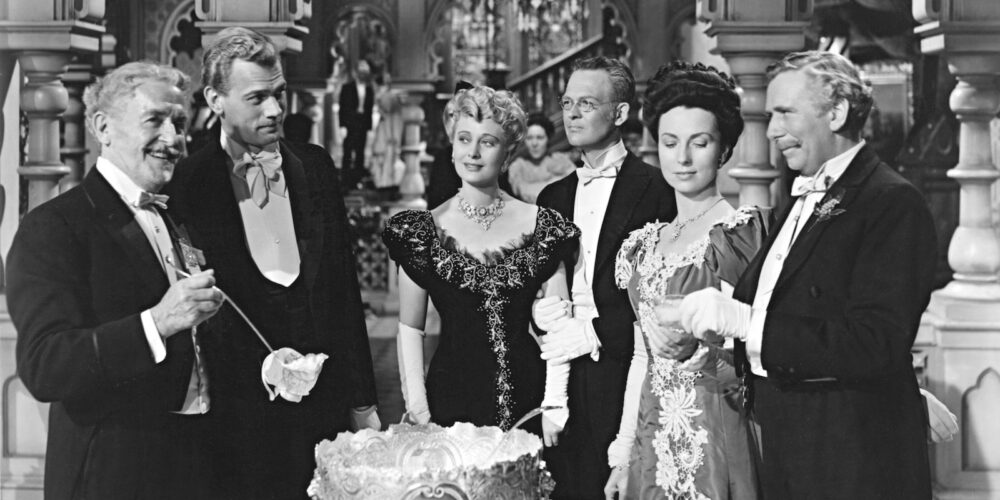
Effectively Ambersons killed off Welles’ directorial career and, whilst he occasionally returned to the studio system (we should not forget that the brilliant Lady from Shanghai for Columbia in 1947 suffered similar studio interference and Universal demanded reshoots on Touch of Evil in 1958) essentially Welles “wandered in the wilderness” for most of his subsequent career – taking as many paying gigs as possible as an actor to fund his work as a director of independent movies (which included, of course his much-lauded takes on Shakespeare).
And yet, on paper, Welles’ sophomore effort had everything going for it. Several of the Mercury theatre newcomers who had appeared in Kane came along for the ride: Joseph Cotten, Agnes Moorehead, Ray Collins and Erskine Sanford (Welles himself, apparently not wishing to become a “movie star,” chose not to appear this time, however – although he does “read aloud” the final credits). The music was composed by Bernard Herrmann, whose work on Kane was so brilliant and paved the way for his subsequent collaborations with Alfred Hitchcock (although, after the film was butchered and his music also largely cut, he asked for his name to be removed and there is no credit for music in the film). The editor was Robert Wise, who had done such a great job on Kane and who would go on to achieve success as a director with movies including West Side Story (1961) and The Sound of Music (1965). And, whilst Welles did not collaborate with cinematographer Greg Toland on Ambersons (they shared a credit at the end of Kane as a tribute to the ground-breaking deep focus work Toland had done on that picture) he did provide another great cinematographer, Stanley Cortez, who had been until then only been a camera operator (learning from the masters Karl Struss and Charles Rosher, who had shot Murnau’s silent classic Sunrise in 1927) with one of his first jobs as first cameraman on a major movie. Cortez’ later achievements include Laughton’s haunting The Night of the Hunter in 1955; impressive work for Sam Fuller and some of Polanski’s neo-noir masterpiece Chinatown in 1974 (although he was fired from this one early on, after clashing with the director over how the film ought to look).
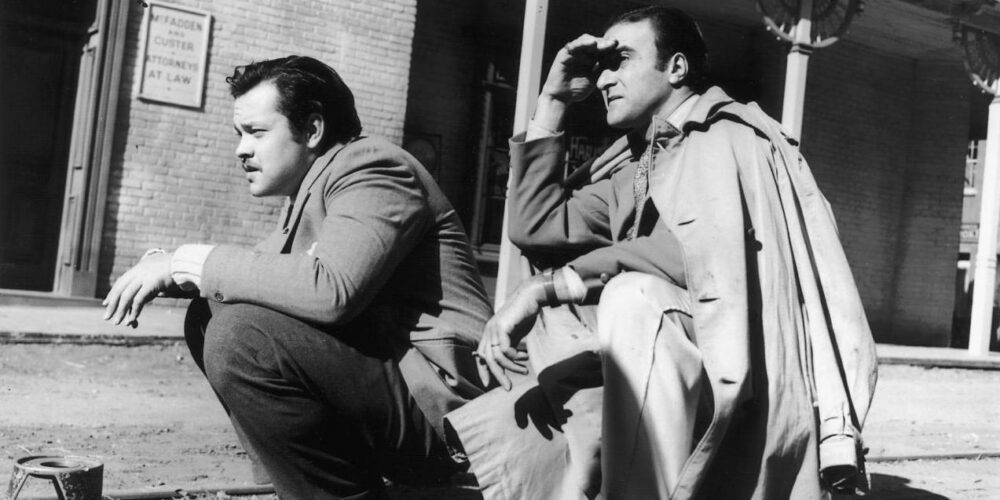
Booth Tarkington’s novel (which had previously been filmed as the long-lost silent film Pampered Youth in 1925) had been awarded the prestigious Pulitzer Prize and, at the time of the film’s production, Tarkington was considered to be an “important” American writer (up there with Mark Twain). Even if today, Tarkington’s name hardly resonates, back in the early part of the last century, his book had been a best seller and, whilst his career subsequently suffered due to the onset of blindness in mid-life, he was still alive when the film got made (he was in his early 70s) and one wonders what he thought of the finished film (if, indeed, he was ever able to see it). Welles had previously adapted it for radio, so knew and loved the book and certainly wanted to remain faithful to the source material (although he did alter the ending).
So, on paper, The Magnificent Ambersons should have been a hit: great cast; hot-shot director; popular novel; superb technical crew. Just why then, did RKO hate the film so much when it was finished?
Partly, the problem was the backlash the studio had received from Randolph Hurst after the release of Kane and that should not be under-estimated. However, the film also played very badly with audiences at early test screenings (there were mass walk- outs). The film’s running time was too long (even Welles agreed) and there was dissatisfaction with Welles’ new downbeat ending (audiences were laughing at the film and its performances).
There was also a difficulty with adequately summarising the film and “selling it” to a country preparing for war. The plot concerns a Midwestern family at the turn of the nineteenth century; their lives and loves; the arrival of the automobile and the family’s accumulation of wealth and its subsequent loss. It’s a sort of historical melodrama but its pessimistic vision of the American Dream was unlikely to play well in the USA at the time (MGM’s war-time drama Mrs Miniver was voted best film at the 1942 Academy Awards – the same year in which Casablanca played its part in encouraging America to get involved in the Second World War and Jimmy Cagney’s musical Yankee Doodle Dandy was the year’s biggest box office success).
So this may well have been another major problem for RKO. They’d allowed Welles to make the wrong film at exactly the wrong time for such a film. It had cost over $1 million (twice the cost of Kane) and eventually made a loss of over $620,000. This was another thing the studio could not forgive Welles for – Kane had lost them about $160,000. Two flops in a row and you’re out, must have been the feeling – although one can’t help but imagine that the old school Hollywood types who profited from the studio system were probably delighted to see the arrogant young upstart, who’d had the audacity to do things so differently, given both a commercial and critical kicking and were probably pleased to see the back of him. In an interview, Welles recalled how RKO produced letter-headed paper after they had effectively fired him (by this time he’d also managed to spend a further $1 million of their money on an unscripted film, shot in Rio, which he’d been asked to make by the President as part of the war effort – don’t ask) which read: “RKO: Showmanship NOT Genius” – clearly a rebuttal of their initial faith in Welles and his abilities.
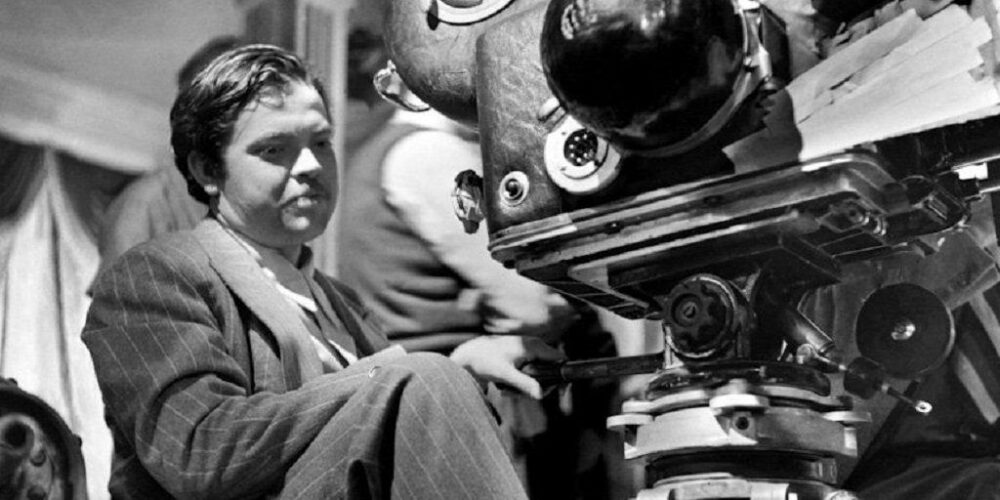
Welles’ friend and fellow director Peter Bogdanovich later claimed that the way The Magnificent Ambersons was treated was the worst case of studio butchery in Hollywood history.
In spite of this, over the years, the film’s stature has risen and, even in the 88 minute version being screened at the UPP in glorious 35mm, the first hour of which remains largely true to Welles’ vision, it’s clearly the case that the film was, in fact, a very worthy successor to Kane. It is beautifully shot; superbly directed and impeccably acted and scripted and, to be fair, it did go on to be nominated for four Academy Awards – best film, best cinematography, best art design and best supporting actress for Agnes Moorhead – although, unsurprisingly, it failed to win anything.
When you see it (and I urge you to do so) you will certainly be left wondering what The Magnificent Ambersons might have been like if the studio had not interfered – but you will also be left in wonder.
And you can’t say that about many films.
The Magnificent Amberson’s is showing as part of our 35mm Films on Film season on Saturday 9th May at 3pm. Citizen Kane screens on 35mm the following day, Sunday 10th May at 5.30pm. Click here to book tickets.
Written by Dr Andrew C Webber, a Film teacher and examiner with 40 years’ experience. He contributed to both the sadly defunct Cinema of the 70s and 80s magazines (still available on Amazon) and the Low Noise music podcast, available on Spotify and Apple podcasts (now in its fifth season). He also spoke at last year’s Vertigo 67 International Alfred Hitchcock conference at Trinity College in Dublin and is currently planning a Hitchcock by Day/De Palma by Night residential to take place at Stowe school in Buckingham in the summer of 2027.