Like so many things that happened over 50 years ago, it’s hard to believe that someone like Gene Hackman could have ever been a successful and popular leading man (and one of my favourite actors, ever).
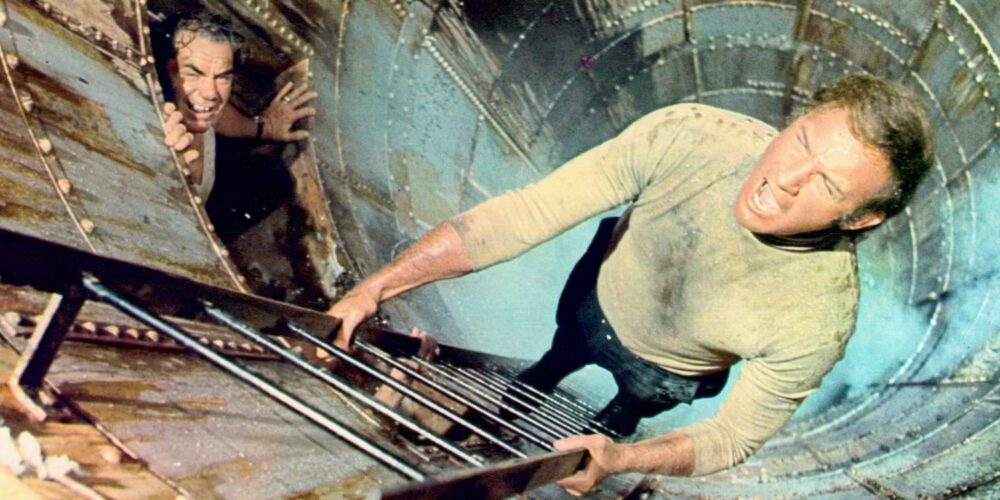
I saw him for the first time as wayward priest Rev. Frank Scott and will never forget his final act of self-sacrifice in Ronald Neame’s star-studded “disaster movie” The Poseidon Adventure in 1972 (which I saw as part of a double-bill with [of all things] Woody Allen’s debut Take the Money and Run – go figure). I probably next saw Hackman in action again, on TV, around the same time, when I first experienced Arthur Penn’s ground-breaking Bonnie and Clyde from 1967, in which he played Buck Barrow, Warren Beatty’s cigar chewin’ “all-American boy” brother (a performance which earned him a well-deserved supporting actor Academy Award nomination).
In the early part of the decade, there was almost no stopping him and Hackman soon became one of the busiest actors in Hollywood.
In 1971 he plays maverick cop Popeye Doyle in William Friedkin’s blistering The French Connection, which is showing at the UPP this month as part of the In Memoriam season. Interestingly, Friedkin sought out a great many other actors for the part, including Paul Newman, Peter Boyle, Steve McQueen, Charles Bronson, Lee Marvin, Charles Bronson and Robert Mitchum, before finally (and reluctantly) settling on Hackman, who, ironically, then went on to win his first Best Actor Oscar for the role. His co-star in French Connection is Roy Scheider, another highly unlikely 70s star. In 1975 he reprised the role in John Frankenheimer’s less effective sequel.
However, in the same year as the original he stars in his first western (alongside Oliver Reed) the brutal The Hunting Party (like many 60s and 70s stars, the western genre features heavily on his CV). After The Poseidon Adventure, Hackman can be seen in another hyper-violent film, Michael Ritchie’s excellent Lee Marvin starring thriller Prime Cut (which also marked the debut of Sissy Spacek) as well as Jerry Schatzberg’s rambling road movie Scarecrow (alongside Al Pacino). In 1974 he plays another iconic role, professional sound recordist Harry Caul, in Coppola’s paranoid masterpiece The Conversation; works with Arthur Penn, again, on the labyrinthine neo-noir Night Moves and also finds time to get in touch with his comedy side in his cameo as the “blind man” in Mel Brooks’ spoof Young Frankenstein. Then he takes a short break before featuring in one of the greatest-cast, war movies ever – Richard Attenborough’s A Bridge Too Far, in 1977 (other American actors in the film include, phew, James Caan, Elliott Gould, Ryan O’Neill and Robert Redford, whilst amongst the Brits there are Michael Caine, Laurence Olivier, Edward Fox and Dirk Bogarde). He ends the 70s playing Lex Luthor in Richard Donner’s enduring comic book extravaganza Superman in 1978. He also turns up in two of the subsequent sequels (the odd one out being the lacklustre Superman 3).
The 80s continue to be kind to Hackman, although his hit rate begins to diminish a little.
In 1981 he reunited with old mucker Warren Beatty (and Jack Nicholson and Diane Keaton) in Oscar winning historical drama Reds and, in 1983, was memorable in Nic Roeg’s much maligned Eureka – a film which has cult written all over it and which I highly recommend, if you’ve never seen it. He’s also great, in 1987, as a dodgy Secretary of Defence in Roger Donaldson’s spy thriller No Way Out (alongside a youthful Kevin Costner and Blade Runner’s Sean Young); works with Woody Allen (who didn’t?) on the unsung Another Woman (which also attracted Gena Rowlands, Mia Farrow, Sandy Dennis and Ian Holm) and is riveting in Alan Parker’s true life tale of deep south racism and civil rights Mississippi Burning (1988).
In the 90s he receives his second Best Actor Oscar for Clint Eastwood’s masterpiece Unforgiven (1992); joins Costner again for the epic Wyatt Earp (1994) and, sticking with westerns, is also very effective as John Herrod, the “baddie” in what is arguably Evil Dead director Sam Raimi’s best film, The Quick and the Dead in 1995. And that’s without mentioning his work for Tony Scott in submarine drama Crimson Tide (1995) and his “return” as Harry Caul (in all but name) in Enemy of the State in 1998. And, lest we forget, he’s also very funny in both Barry Sonnefeld’s Elmore Leonard adaptation Get Shorty (1995) alongside John Travolta and Mike Nichols’ The Birdcage in 1996 (alongside Robin Williams).
In 2001 he makes what, with the benefit of hindsight, ought to have been his swansong – Wes Anderson’s sublimely affecting The Royal Tenenbaums, written with Hackman in mind for the lead role but, apparently, a very unhappy shoot, in spite of its masterly outcome. However he doesn’t quite give in and he can also be seen in the John Grisham adaptation Runaway Jury in 2003 and his final film Welcome to Mooseport in 2004.
There are a great many other appearances I’ve not mentioned, after all Hackman starred in nearly 80 movies, not all of them much cop but, even if he may have been in some forgettable films (Bat*21, Full Moon in Blue Water, The Replacements, anyone?) he himself never gave a poor performance. After all, Hackman was always Hackman and could be relied upon to be dour, dangerous and dumb; sentimental and tough; kind yet deadly. In many ways, there was always something strangely oxymoronic about his characters. He could do rebellious and anti-establishment; he could do vicious; he could do wounded and bruised; he could do imperious; he could do malicious; he could do almost anything (hero, villain, supporting player, comedy cameo) and still remain what he always appeared to be – an everyman. Physically he was slightly pudgy-faced, balding and gave the impression of being a bit out of shape and past his prime (even in his earlier performances). Behind his quick eyes, however, a lean intelligence prevailed and you were never quite sure at what point he might let the demons out. You were always wary of Hackman when he was on screen – he had the kind of persona that might explode at any time. It was always there, bubbling away beneath the surface – but it also gave him an unusual sex appeal – “interesting” women on screen (including Estelle Parsons, Eileen Brennan, Liza Minnelli, Susan Clark, Candice Bergen, Valerie Perrine, Catherine Deneuve, Barbra Streisand, Ann Archer and Angelica Houston) often fall for him, in spite of, or perhaps because of, his dark charisma.
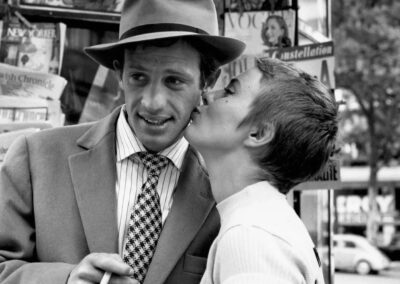
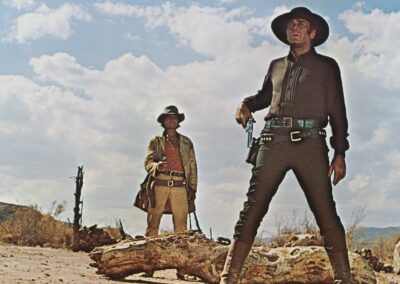
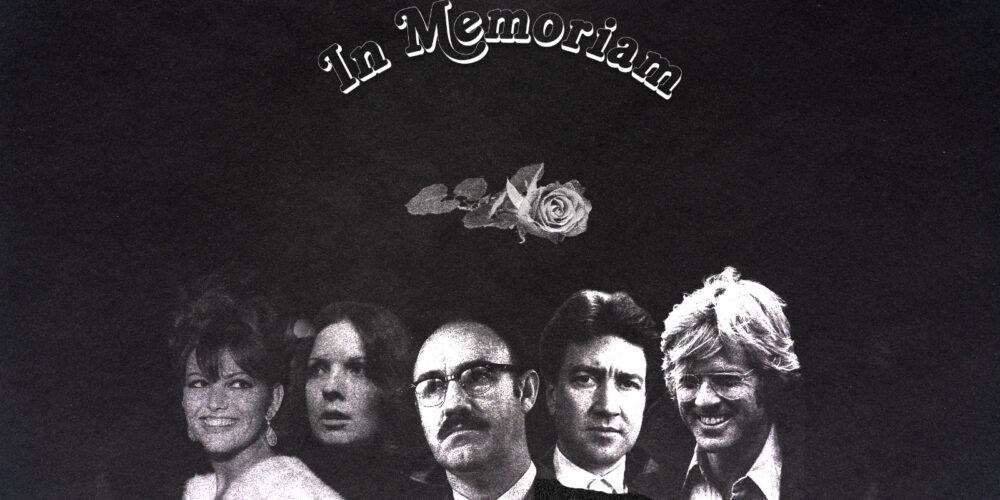
During the In Memoriam season we have said our farewells to several actors and directors whose work, incidentally, played a significant part in defining my own life as a cinema goer. Redford will forever be the Sundance Kid, radiant in his beauty in the fading sunlight; David Lynch will always be the man who gave his madness black and white luminosity when he, surprisingly, followed up the surreal Eraserhead with the profoundly moving The Elephant Man and Claudia Cardinale will be (as I wrote at the beginning of the year) eternally rolling up her sleeves to give water to the migrant workers at the end of Sergio Leone’s magnificent Once Upon a Time in the West.
Gene Hackman, however, for me, will best be remembered (minus his pork pie hat) behind the wheels of a speeding car in early 70s downtown New York, determined to get his man, no matter who or what what gets in his way. The car chase is The French Connection remains one of the finest and most exciting action scenes ever shot. It’s relentless, breathless cinema and one of the many highlights of the decade.
Which makes the film a must-see on the big screen when it plays at the UPP this month.
In a world where AI is increasingly threatening to play a significant part in the entertainment industries of the future and CGI has largely wiped out the need for mainstream films to offer us any tangible threat and danger, Gene Hackman’s illustrious career reminds us that one of the real pleasures of cinema has always been watching great actors do great work. Not necessarily attractive, hunky or seductive actors (although there’s nothing wrong with those either) but actors who can make you believe in them; whose personalities are flawed and damaged, relatable and raw. And a bit like all of us.
Gene Hackman, I salute you.
Like Eastwood, you always appeared to be “there.” Until, finally, you no longer were.
And the world has got that little bit smaller, as it should do, when someone who shaped you passes.
The French Connection is showing as part of our In Memoriam season on Sunday 25th January at 2.15pm and Wednesday 28th January at 8.45pm. Click here to book tickets.
Dr Andrew C Webber is a Film teacher and examiner with 40 years’ experience. He contributed to both the sadly defunct Cinema of the 70s and 80s magazines (still available on Amazon); cassette gazette fanzine (available from cassette pirate on e-bay) and the Low Noise music podcast, available on Spotify and Apple podcasts (now entering its fifth season). He also spoke at last year’s Vertigo 67 International Alfred Hitchcock conference at Trinity College in Dublin.